Plant hormones are crucial for growth and physiological processes, but their evolutionary origins remain unclear.
Research by scientists from our institute, Charles University and Ghent University has revealed that these compounds are also found in freshwater green algae, the closest relatives of terrestrial plants. However, it is likely that they acquired their hormonal functions only when the plants moved onto land. The study was published in the prestigious journal Nature Communications.
Plant hormones (phytohormones) control the growth and development of plants and their responses to various stimuli - such as light, gravity or disease attack. Because of their importance for plants, they are at the forefront of life science research, and manipulating their levels is a common method of agricultural and biological practice.
Although phytohormones are generally widespread in all terrestrial plants, the evolutionary origins of their biological roles are not yet fully understood. The closest living relatives of terrestrial plants, the freshwater green algae, can help us to understand them.
It was by studying these algae that a Czech-Belgian team decided to investigate the evolution of phytohormones. The group consisted of biologists and analytical chemists from three institutions: Institute of Experimental Botany of the Czech Academy of Sciences, Faculty of Science of the Charles University in Prague and Ghent University.
Today's terrestrial plants and green algae are the result of independent evolutionary processes; their paths diverged before the first vertebrates set foot on land. Although the common ancestors of terrestrial plants and green algae have long since become extinct, we can infer their likely appearance and life processes - including the possible role of phytohormones - by comparing all currently living groups that are related to them.
Therefore, a key aspect of this work was the wide range of organisms analysed. In total, the researchers examined 18 representatives of different lineages of algae and land plants to verify the presence of up to 50 substances known for their phytohormonal function.
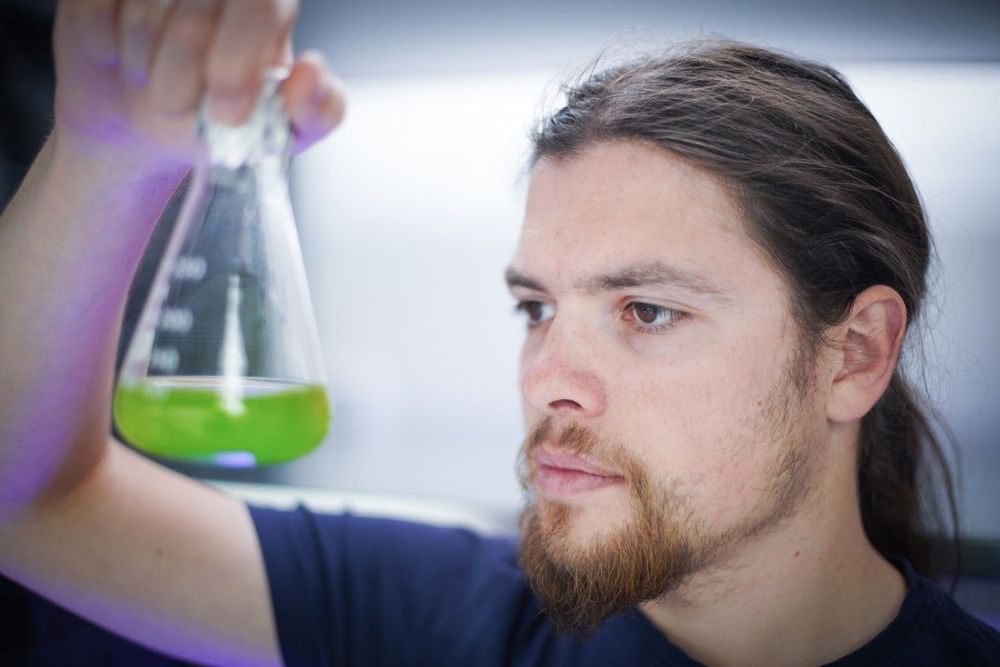
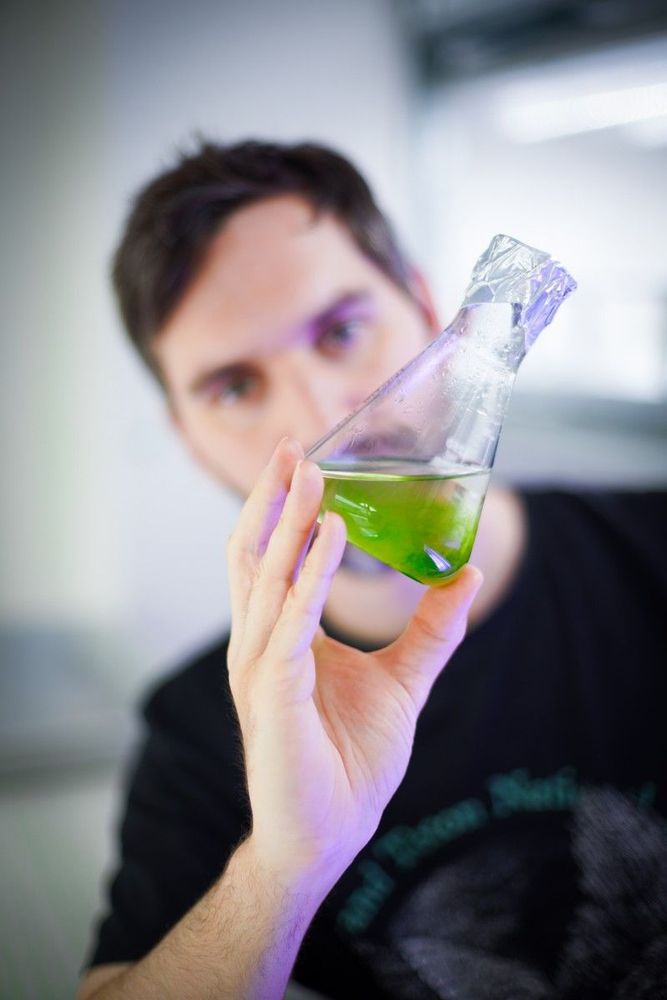
Vojtěch Schmidt and Roman Skokan - lead authors of the study. Photo: Roman Skokan.
"So far, scientists have estimated the ability of algae to produce phytohormones mainly by comparing their genetic information with terrestrial plants. However, from limited data, it seemed that green algae can produce these compounds regardless of the presence of genes that control this process in terrestrial plants. We have now confirmed this," says Roman Skokan, one of the two lead authors of the research.
Today, plant evolution is mainly studied by analysing the genetic information encoded in DNA. But this approach does not take into account the fact that different groups of organisms may share similar traits, which are however determined by different genetic mechanisms.
Indeed, previous research has suggested that green algae can produce phytohormones, although they lack the genes for their synthesis known from terrestrial plants. The researchers therefore directly measured phytohormone levels in green algae and some less-studied land plants using a modern and highly sensitive method called liquid chromatography coupled to mass spectrometry.
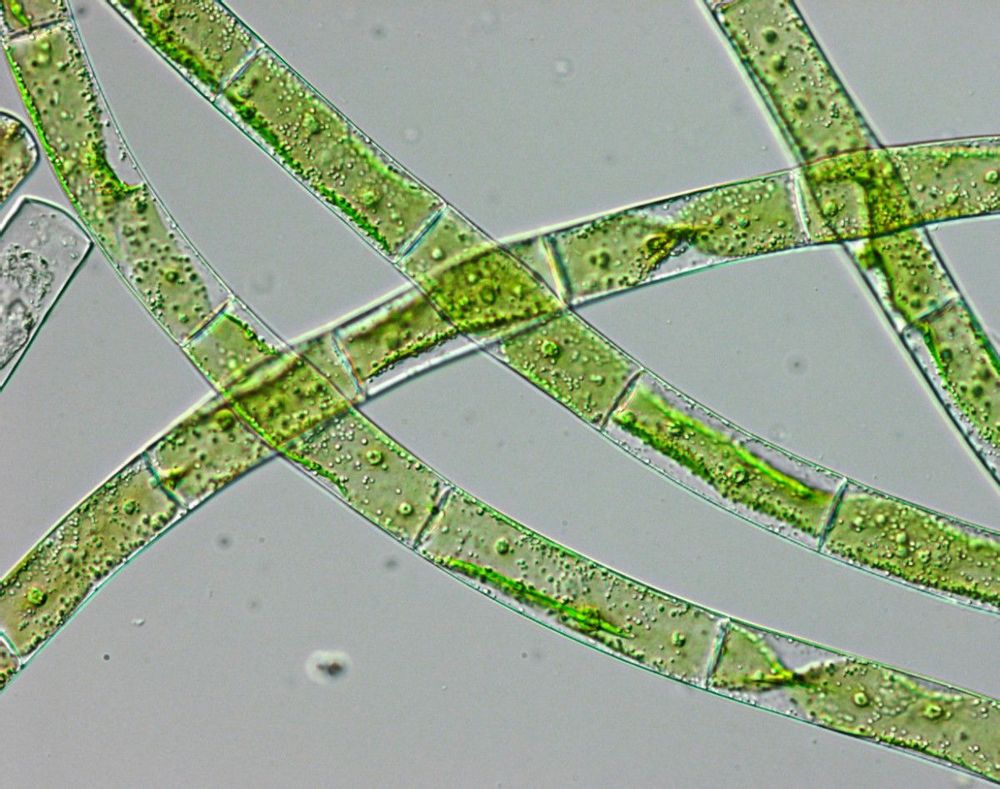
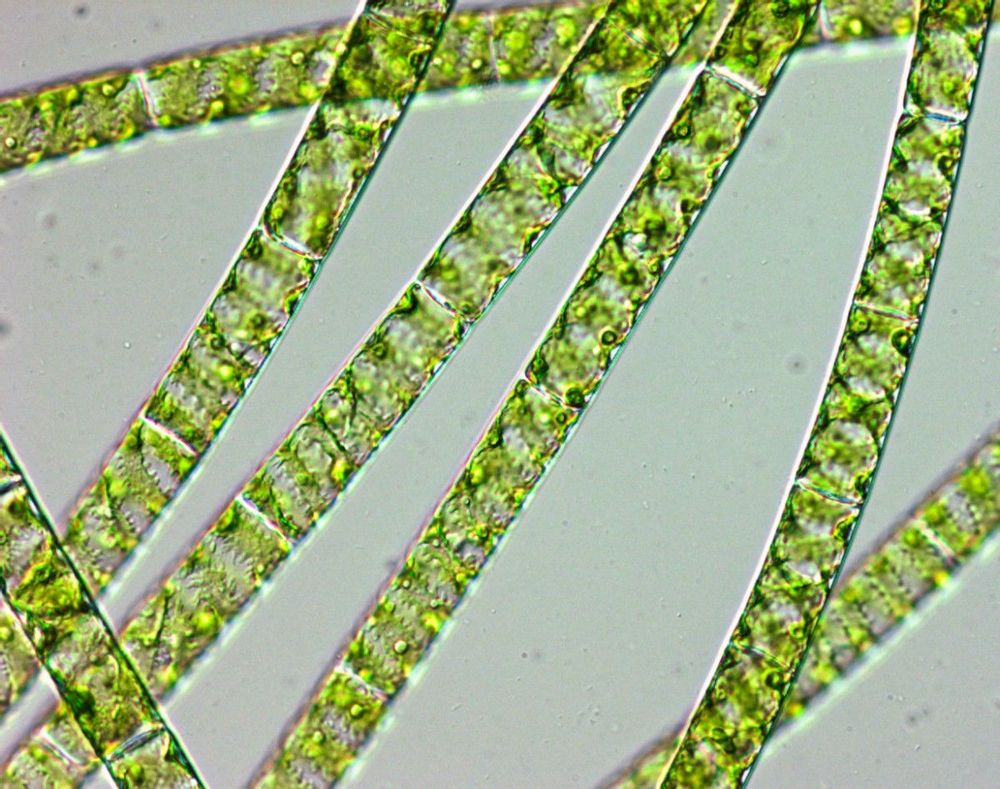
In this study, Mougeotia (top) and Spirogyra (bottom) represented the Zygnematophyceae, an algal group most closely related to land plants. They are abundant in various types of stagnant and moderately flowing waters. Photo: Vojtěch Schmidt.
The research has yielded many results. Let's mention at least the main ones: Two phytohormones primarily controlling growth and development - auxins and cytokinins - were found in all land plants, as well as in green algae.
In contrast, abscisic acid, a phytohormone active in response to stress (e.g. drought), was found only rarely in green algae, probably as a by-product of other metabolic pathways. Finally, terrestrial plants differed from algae by producing a special class of cytokinins, pointing to an important evolutionary innovation after the transition to land.
Thus, many organic compounds known in plants as phytohormones are also found in freshwater green algae. Do these substances share similar functions in both groups?
"This question requires further research. From the available information, it appears that many phytohormones acquired their present regulatory roles only in the common ancestor of today's land plants. In green algae, they may have been metabolic by-products or had other functions before being harnessed to their new, hormonal role in plants," explains Vojtěch Schmidt, the second lead author of the paper.
The study has mapped in detail the occurrence of phytohormonal compounds across green algae and serves as a useful springboard for further research. Elucidating the ancient, pre-hormonal nature of these compounds will require, among other things, an analysis of their effects on the growth of green algae. Researchers at our institute are now investigating the evolutionary origins of a class of phytohormones called auxins in this way.
* * *
Article reference:
Schmidt V, Skokan R, Depaepe T, et al. (2024): Phytohormone profiling in an evolutionary framework. Nature Communications 15, 3875. https://doi.org/10.1038/s41467-024-47753-z
(free - open access)
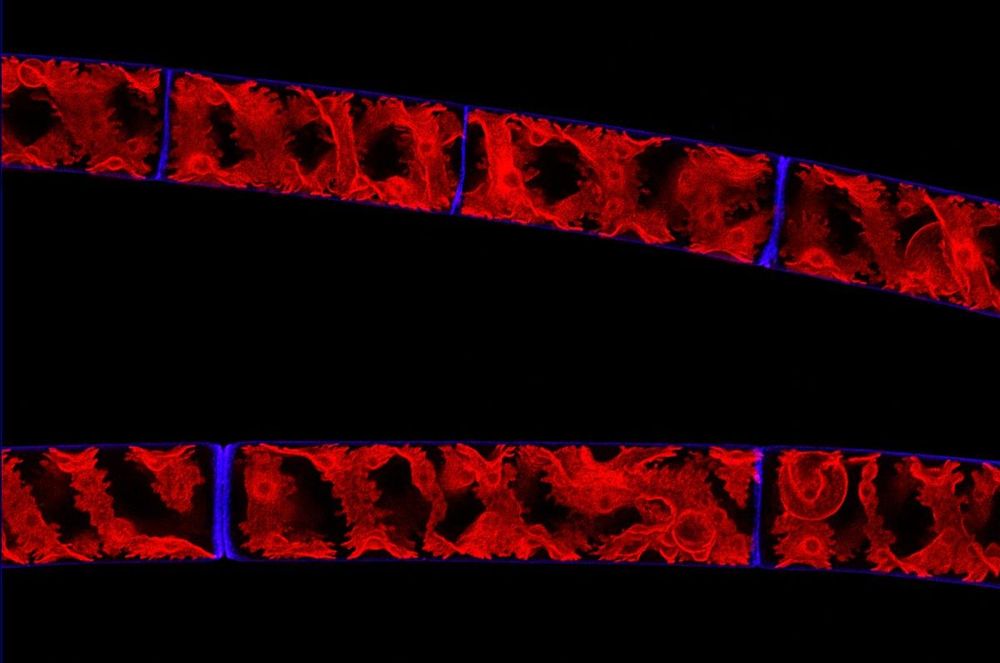
Spirogyra and its charming helical chloroplasts that fluoresce red when exposed to ultraviolet radiation. Photo: Vojtěch Schmidt.
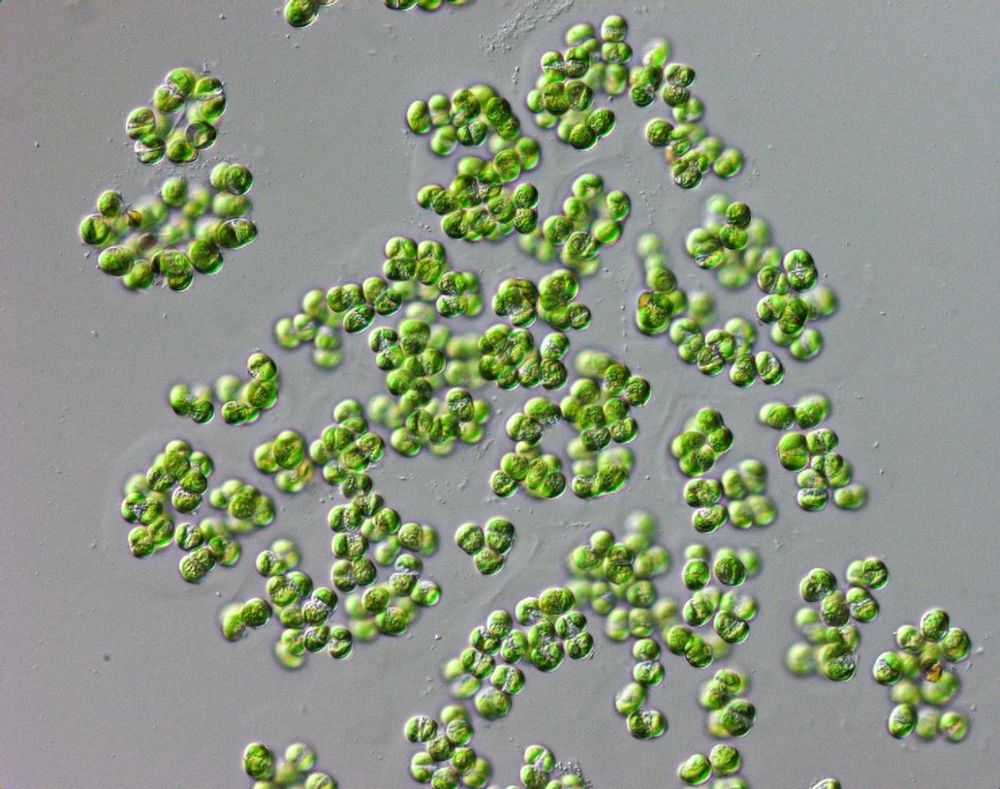
Chlorokybus, a representative of green algae more distant from plants. This rarer species forms slime-like colonies on soil and rock surfaces. Photo: Vojtěch Schmidt.