Ondřej Novák from our institute and the Faculty of Science at the Palacký University in Olomouc has succeeded in a tough competition and was awarded a grant from the European Research Council (ERC).
The STARMORPH project in the Synergy Grants category is supported by €10 million and focuses on research into the role of the plant hormone auxin in plant growth and shape formation.
Ondřej Novák will work on the six-year research together with project coordinator Stéphanie Robert from the Swedish University of Agricultural Sciences, Jürgen Kleine-Vehn from the University of Freiburg and Alexander Jones from the University of Cambridge.
"Our multinational, interdisciplinary team has an exceptional make-up in order to describe the complexities of plant morphogenesis in a way that no one has been able to do before," says Ondřej Novák from the Laboratory of Growth Regulators, a joint facility of the Faculty of Science of Palacký University in Olomouc and the Institute of Experimental Botany of the Czech Academy of Sciences. The obtained knowledge can be used in the future to increase crop yields, which can contribute to improved food security and sustainability.
"Receiving the ERC Synergy grant is a great success for our colleague Ondřej Novák as an undisputed scientific personality, but also for our whole institute. This confirms that the institute is a world leader in the field of plant hormone research. It is also a promise of new discoveries that have the potential to contribute to solving global problems brought about by climate change," says Jan Martinec, director of the Institute of Experimental Botany of the Czech Academy of Sciences.

Professor Ondřej Novák. Photo: Jana Plavec, Czech Academy of Sciences
Learning to reprogram plant growth
Scientists in the STARMORPH project are using the model plant arabidopsis or thale cress (Arabidopsis thaliana) to study the development of its apical hook that plays a crucial role in further growth and development of the plant after it germinates from seed.
The apical hook is the curved part of the stem near its top that allows the plant to grow safely through the soil. The hook is formed by suppressing cell growth on the inside of the emerging stem. As soon as the seedling penetrates the soil to the surface, the cells on the inside begin to elongate again and the hook opens.
"This property makes the apical hook a unique model for investigating how a plant can regulate the processes of suppressing or promoting cell growth. Studying this topic is very important because if we understand how to regulate plant growth, we could intentionally reprogram this process," adds Ondřej Novák.
The phytohormone auxin plays a major role in differential growth, where different parts of plant organs grow at different rates, and will be the focus of the STARMORPH project. Depending on the concentration of auxin and its localisation in the plant tissue, cell elongation can be slowed or accelerated, cell division can be stopped or promoted, cells can be induced to specialise, or they can be allowed to return to an undifferentiated state.
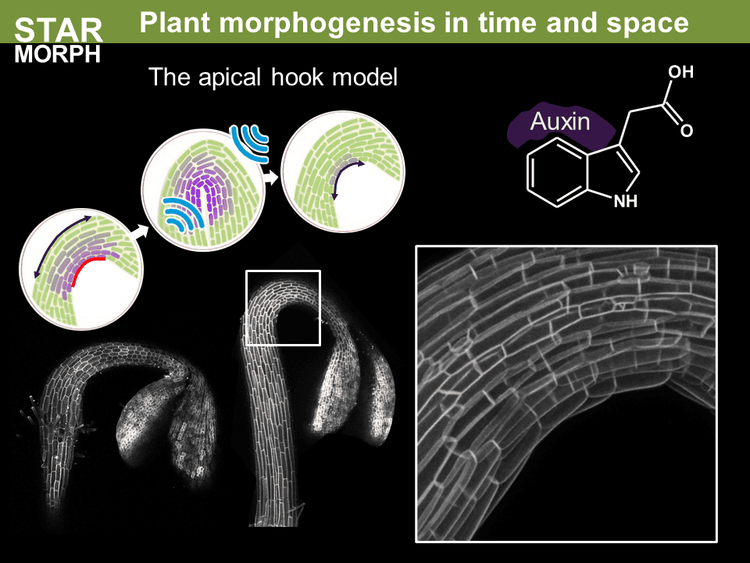
The apical hook of a germinating plant and its development. Source: the STARMORPH project
Auxin signature
"The results of our research should reveal how the phytohormone auxin, mechanical signals, and developmental programs interact together at multiple levels. The project introduces a concept of an 'auxin signature', which involves the dynamics of auxin within the plant cell in response to mechanical signals."
"For decades, scientists have focused on understanding the multiple roles of auxin, concentrating on its tissue and intercellular dynamics or auxin signalling through receptors in the cell nucleus. Recently, there are emerging findings that auxin is perceived by different mechanisms in the nucleus, outside the nucleus and in the extracellular space," notes Ondřej Novák.
According to Ondřej Novák, the STARMORPH project uses an interdisciplinary approach combining plant physiology, cell biology, genetics, biophysics, synthetic biology and bioanalytical chemistry. Four scientific teams will work together to investigate how changes in auxin distribution and concentration affect plant morphogenesis, i.e. plant shape and growth. "We will develop new chemical and bioengineering methods to map auxin inside cells and monitor its dynamics over time and space," adds Professor Novák.
They will also try to understand if and how mechanical stimuli are linked to the phytohormone auxin. "This goal includes a detailed study of the mechanical properties of the cell wall and their influence on plant growth. Using genetics and biochemical methods, we will try to understand how mechanical signals and auxin dynamics together control morphogenesis at different levels, from cells to whole organs," says Ondřej Novák.
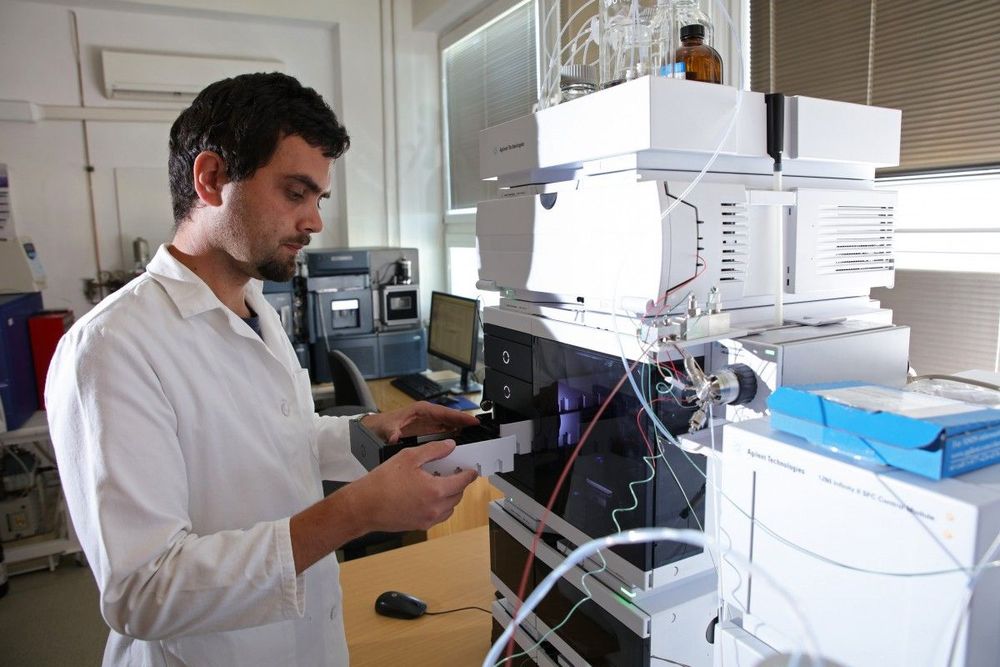
The LC-MS/MS mass spectrometer that will be used in the project. Photo: Ota Blahoušek
Arabidopsis as a plant mouse
The thale cress (also called arabidopsis) is an important experimental plant in the scientific world, earning it the nickname "plant mouse". It is used in plant molecular biology because of its simplicity and ease of cultivation. It also meets other conditions for model organisms - a small genome (complete hereditary information), a short time between two generations and a sufficient amount of offspring.
It is therefore one of the most widely used model organisms in biological laboratories. At the turn of the millennium, it was the first plant whose genome was deciphered by scientists. It is a species from the Brassicaceae family, so it is related to, e.g., oilseed rape or cabbage.
ERC Synergy Grants are dedicated to multidisciplinary projects involving 2-4 research teams. Projects must demonstrate that the synergy between the scientists involved and their disciplines is central to the project and promises to deliver breakthrough discoveries.
The total budget for this grant call in 2024 was €570 million. Of the 540 projects evaluated, 56 were supported. Established by the European Union in 2007, the ERC is Europe's leading organisation for funding cutting-edge research.
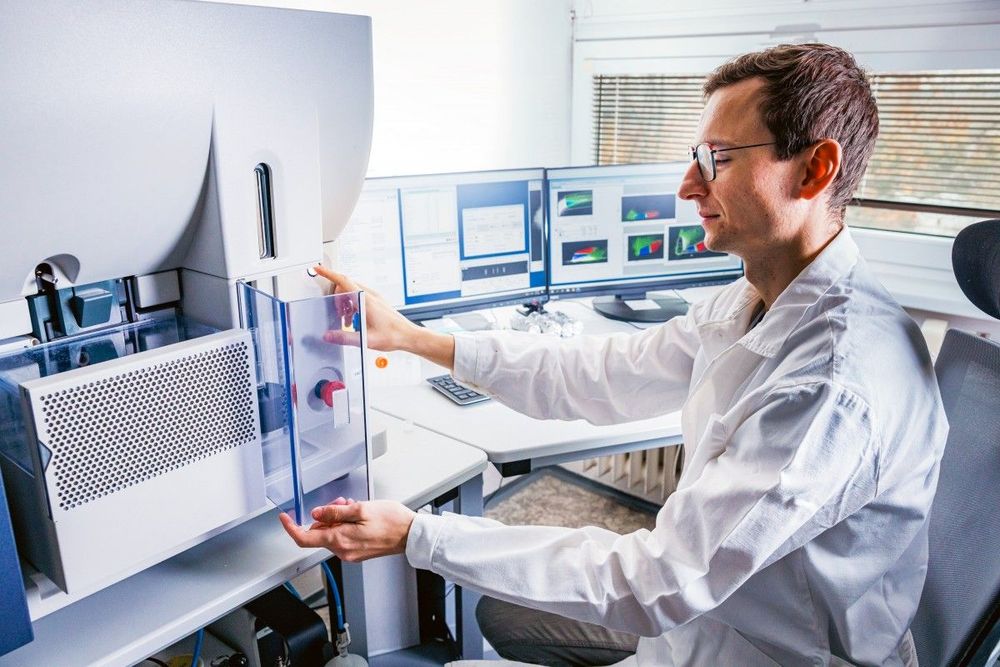
Olomouc scientists will also work with the FACS flow cytometer, which is used to sort cells or cell parts. Photo: Ota Blahoušek
* * *
Prof. Mgr. Ondřej Novák, Ph.D., graduated from the Faculty of Science of Palacký University in Olomouc.
His research interests include, among others, the study of biosynthesis and metabolism of plant hormones using the highly sensitive analytical method of mass spectrometry or the relationships between the chemical structure and biological activity of plant hormones. He has a long-standing interest in the use of new bioanalytical techniques and simplified extraction methods for the isolation of biologically active compounds from complex biological samples.
He is one of the few scientists in the Czech Republic to have been ranked in the top one percent of the world's most cited scientists for six consecutive years in the Highly Cited Researchers list published by the US company Clarivate Analytics.
* * *
For experts: a graphic abstract of the project

To reveal the role of the subcellular distribution of auxin (indole-3-acetic acid, IAA; red) and the accessibility of auxin sensing pathways during morphogenesis, we will study differential growth (blue line) and the resulting mechanochemical cues during apical hook development in Arabidopsis thaliana (left part) using cell biology, genetics, biophysics, synthetic biology and bioanalytical chemistry. Source: the STARMORPH project
* * *
Source: press release of the Czech Academy of Sciences, text by Šárka Chovancová, Markéta Růžičková, Ondřej Novák
Translation and editing for the web: Jan Kolář (using DeepL)