A surprising genetic mechanism allows tobacco cell cultures to grow and divide even without the addition of auxin, an otherwise essential hormone.
Teams from the Institute of Experimental Botany of the Czech Academy of Sciences (IEB CAS) and the Department of Experimental Plant Biology at the Faculty of Science, Charles University, have described how cells acquire this ability. The study represents an example of “evolution in a test tube”, when cell cultures acquire new hereditary traits in laboratory conditions. The discovery helps to understand the basic principles of plant cell division and may facilitate developments in biotechnology. The results were published by the scientific journal New Phytologist.
In cell cultures, cells originally isolated from plants cluster into small groups or chains. These cultures are often used to study biological processes at the cellular level and also serve to produce substances useful in medicine or the food industry.
Cells in culture typically divide thanks to the addition of the plant hormones auxin and cytokinins. An exception are the so-called habituated lines, which proliferate even without the addition of these compounds. This “superpower” develops gradually in cultures, for example during long-term cultivation with low levels of the given hormone.
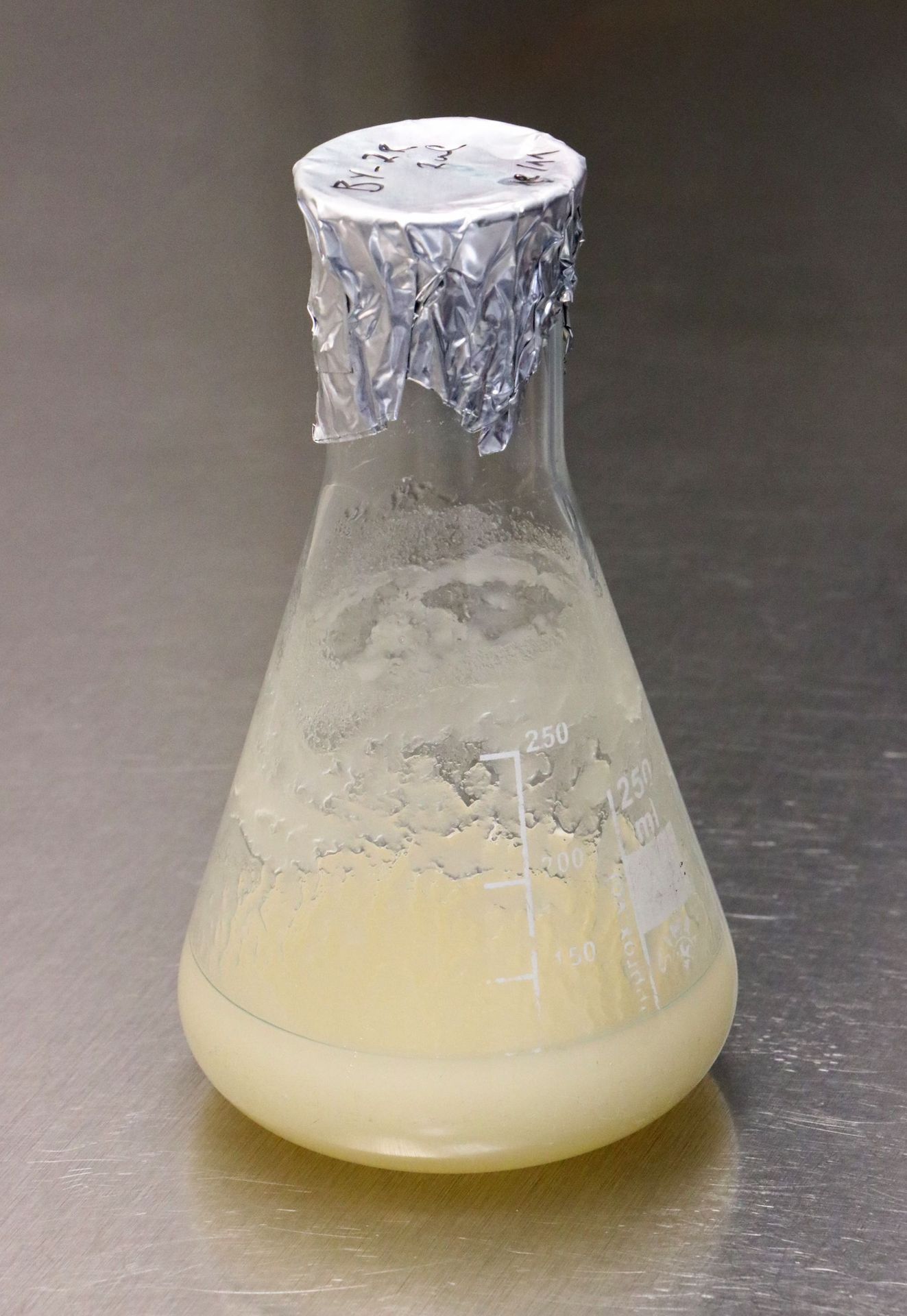
BY-2 tobacco cell culture grown in liquid nutrient solution. Photo: IEB CAS archive.
How cells circumvent hormonal dependence
“Cytokinin independence is relatively easy to achieve and well researched. Auxin independence, on the other hand, is quite rare, and its mechanisms remained unknown. That is why we decided to elucidate them,” explains co-author of the article Jan Petrášek from our institute.
The biologists compared two common tobacco cell lines with two auxin-independent lines that had been derived from them in the past. They found that one of the independent lines has an extremely active gene for the TIR1 receptor—a protein that allows cells to detect the presence of auxin.
“When we experimentally increased the production of this protein in cells of the original line, they also became independent of auxin supplementation. This confirmed that TIR1 plays a key role. It’s fascinating to see how cells were able to develop such a remarkable evolutionary trick,” explains Karel Müller from our institute, one of the study’s lead authors.
Higher TIR1 levels mean that even a small amount of auxin produced by the cells themselves is sufficient for them to divide. Furthermore, upon examining the DNA, the researchers discovered that the region containing the TIR1 gene had been copied many times during long-term cultivation under laboratory conditions. This explains the gene’s high activity and the cells’ ability to grow without added hormone.
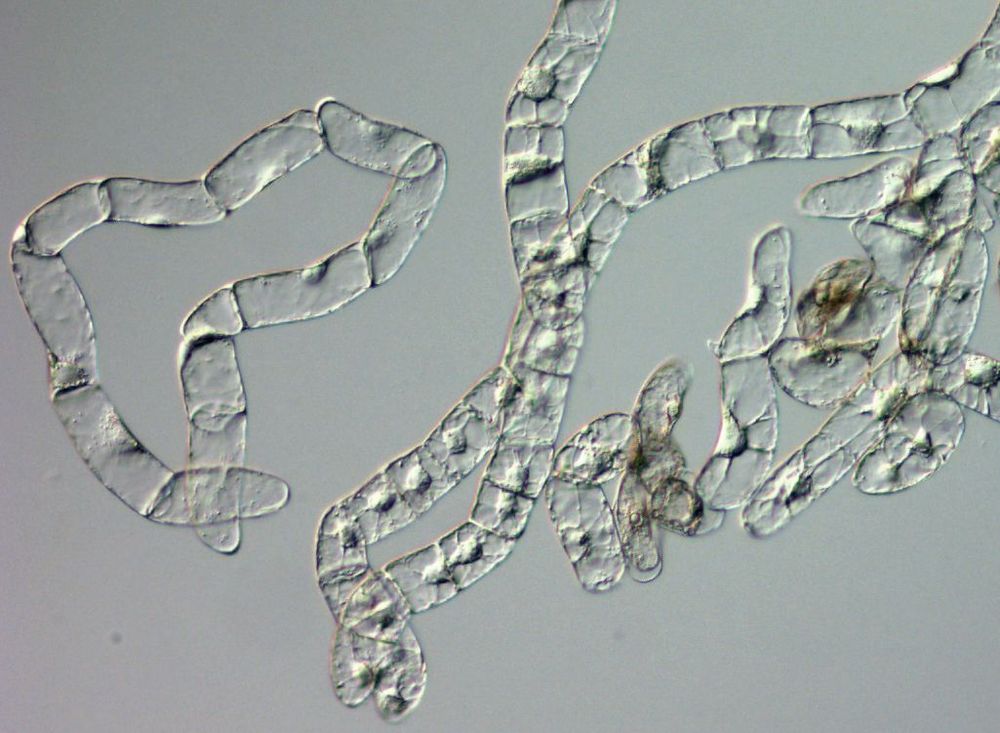
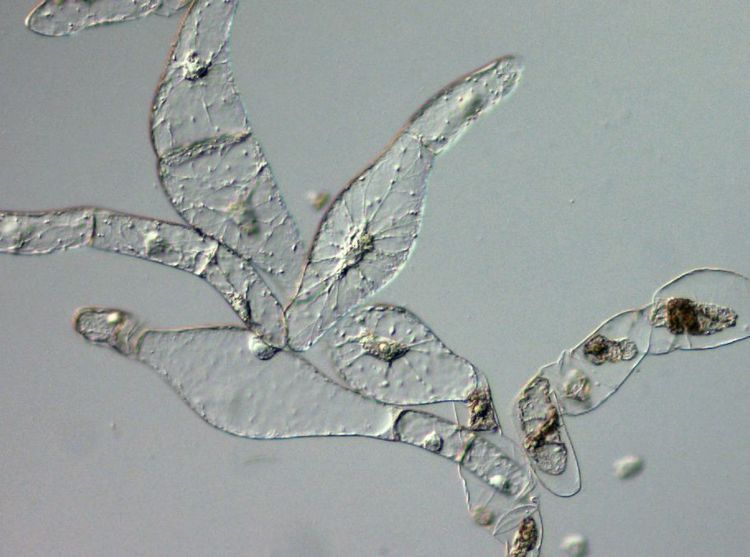
Comparison of two tobacco cell cultures grown in liquid medium without auxin. Cells that do not depend on added auxin divide normally and form chains (top). Cells requiring this hormone in the medium are enlarged, have an atypical shape, and are unable to divide efficiently (bottom). Photo: Milada Čovanová, IEB CAS.
An evolutionary solution as an inspiration for biotechnology
“We are the first in the world to describe such an interesting mechanism for the development of auxin independence,” says Karel Müller. However, he adds, a different mechanism is at work in the second line studied, because here the researchers found changes in the activity of regulatory genes other than TIR1.
“The very cause of the increased activity of the TIR1 gene was a big surprise. None of us expected the relevant DNA region to be amplified to several hundred copies. We are now trying to clarify how this happened. Furthermore, based on the analysis of genetic information, we know that this is not the only change in the DNA of the studied lines, so we plan to conduct a more detailed analysis of them,” adds another member of the research team, Lukáš Fischer from the Department of Experimental Plant Biology at the Faculty of Science, Charles University.
The project’s results also suggest practical applications. Using appropriate genetic modifications, including those inspired by “evolution in a test tube,” it would be possible to specifically create new auxin-independent lines in various plant species.
Such cultures could make laboratory cultivation more efficient and avoid the use of the synthetic auxin 2,4-D, which is commonly used but harmful to health. The authors of the study have already approached several biotechnology companies with this idea.
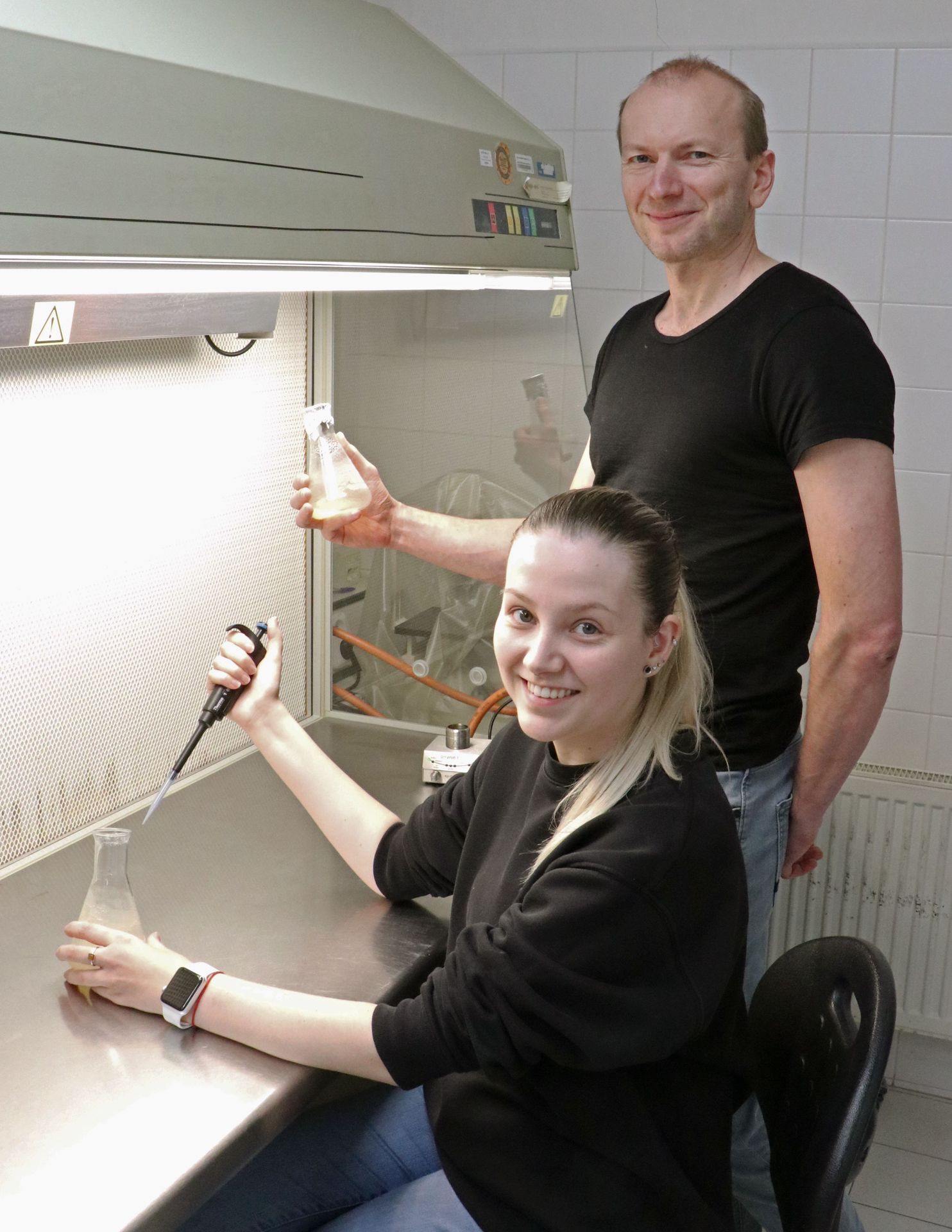
Two members of the research team—Anita Bírošíková and Karel Müller from the IEB CAS. Plant cell cultures must be handled under sterile conditions. The device shown in the photo, known as a flowbox, is used for this purpose. Photo: IEB CAS archive.
Link to the article:
Jelínek P, et al. (2025): A novel mechanism of auxin habituation: upregulation of auxin receptor TRANSPORT INHIBITOR RESPONSE 1 allows cell proliferation independent of external auxin. New Phytologist
https://doi.org/10.1111/nph.70763
(open access)